



Pharma Effluent Treatment Plant
An essential commodity, water plays a vital role in almost all stages of pharmaceutical and intermediate chemical manufacturing industries.
In the pharmaceutical production plant, there are various methods of wastewater treatment that include aerobic / anaerobic treatment, reverse osmosis, multimedia / carbon filtration, evaporation etc. Through these processes, the water is treated, recycled, reused or released out in the environment, to meet the norms of the government or ward off the problem of water scarcity.
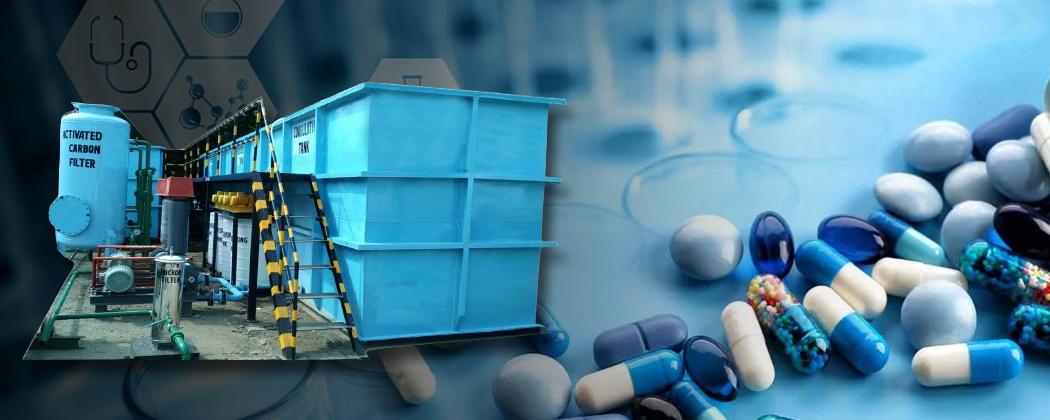
Effluent Treatment Plant (ETP) for Pharmaceutical
The waste released out of Pharmaceutical industries and drug manufacturing units contain various ingredients, solvents and other substances that are harmful to humans and animals. Technologies such as aerobic / anaerobic treatment, membrane filtration and reverse osmosis work efficiently for different streams of this industry that reduce Chemical Oxygen Demand (COD), Biological Oxygen Demand (BOD), Total Suspended Solids (TSS) and Total Dissolved Soilds (TDS) in the pharmaceutical effluent.
Treatment of Pharmaceutical Wastewater Industry
The treatment of water in Pharmaceutical industry varies from different processes and technologies that the companies adopt. The treatment is carried out as follows:
1. Preliminary Treatment
The wastewater is passed through a bar screen chamber where the floating particles are filtered out. The water is then collected in the collection tank.
2. Aeration
The water collected is aerated by blowing air through air blower for a day. The water is transferred to the neutralization tank, after the aeration process.
3. Neutralization
The pH of wastewater in the neutralization tank is adjusted between 6-7.
4. Flocculation and Coagulation
The flocculating agent is added to the effluent i.e. alum that is widely used, to flocculate the suspended material. Polyelectrolyte solution is also added to coagulate the flock of the suspended materials in the form of sludge at the bottom of the tank. The concentration of the solution depends upon the suspended material in the effluent. The effluent is further transferred to the bioreactor tank.
5. Biological Degradation
In the bioreactor tank, the nutrients are added for the proper growth of bacteria that degrade the organic matter of the effluent. The sludge is segregated from the settling tank and the water is filtered through activated carbon filter.
6. Filtration
The treated effluent is passed through the activated carbon filter to remove coloring material.
7. Recycle
Recycle through high efficiency Reverse Osmosis systems is the final step where the end process need is recovery of water. Rely on us for efficient wastewater treatment systems.